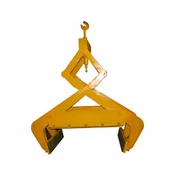
Vertical Lifting Clamp
The clamp body and the clamp tongue are connected through the clamp shaft. Generally, the pull ring and the clamp tongue will form the entire lifting clamp product with the clamp body. The switch of the pull ring part is installed on the clamp body through bolts and nuts.

- Product Introduction
Henan Zhongzao Industry Co., Ltd has a registered capital of 10 million yuan, which is located in Changyuan City, Henan Province, and we are professional manufacturer and seller of crane accessories.Our main products include crane spreader, crane hook sets, pulley sets, rolling pulleys etc.The company covers an area of 9600 square meters and has R & D technical team with rich practical experience and strong development ability.
Why Choose Us
Technical team
We have 6 professional engineers and a R&D technical team with rich practical experience and strong development capabilities.
Advanced equipment
The company has a complete manufacturing process and tooling for crane parts and 52 sets of processing equipment. It can produce Φ200mm-Φ2000mm ring forged pulleys, rolled pulleys, forged pulleys and other pulley sets and pulley specifications.
Rich experience
The company was established in 2012 and has more than 10 years of production experience and 5 years of export experience.
Our certificate
ISO9001, ISO4001, ISO45001
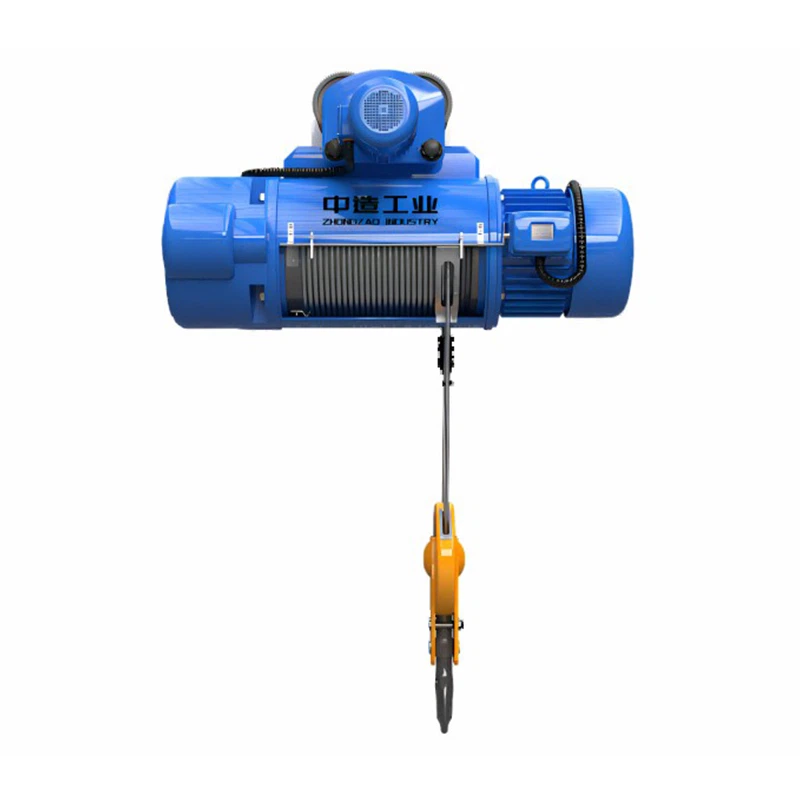
CD and MD Electric Wire Rope Hoist
Model CD1 and MD1 wire rope electric hoist is small-sized lifting equipment, which can be mounted on single beam, bridge, gantry and arm cranes. With slight modification, it can also used as a winch. It is widely used in factories, mines, harbors, warehouse and shops, essential in raising working efficiency and improving working conditions.
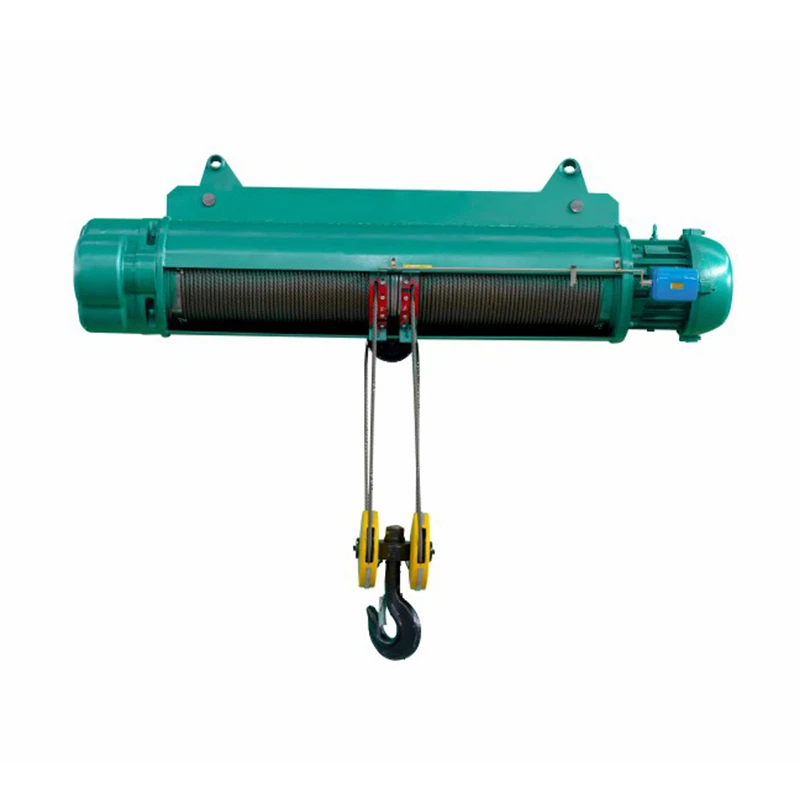
Fixed Electric Wire Rope Hoist
The crane has carried out a number of technical innovation and optimization design on the original basis to improve the performance, safety and reliability of the crane. Through the detailed analysis of the main components of the crane, the working principle and advantages are expounded, which provides a useful reference for the development and application of similar products.

Explosion Proof Electric Wire Rope Hoist
Explosion-proof electric hoist is the explosion-proof lifting equipment designed and manufactured by the latest explosion-proof standard in China. Its explosion-proof form is "explosion-proof type". The exposed explosion-proof parts of the calabash are made of special spark-free materials, and the explosion-proof performance is safe and reliable.

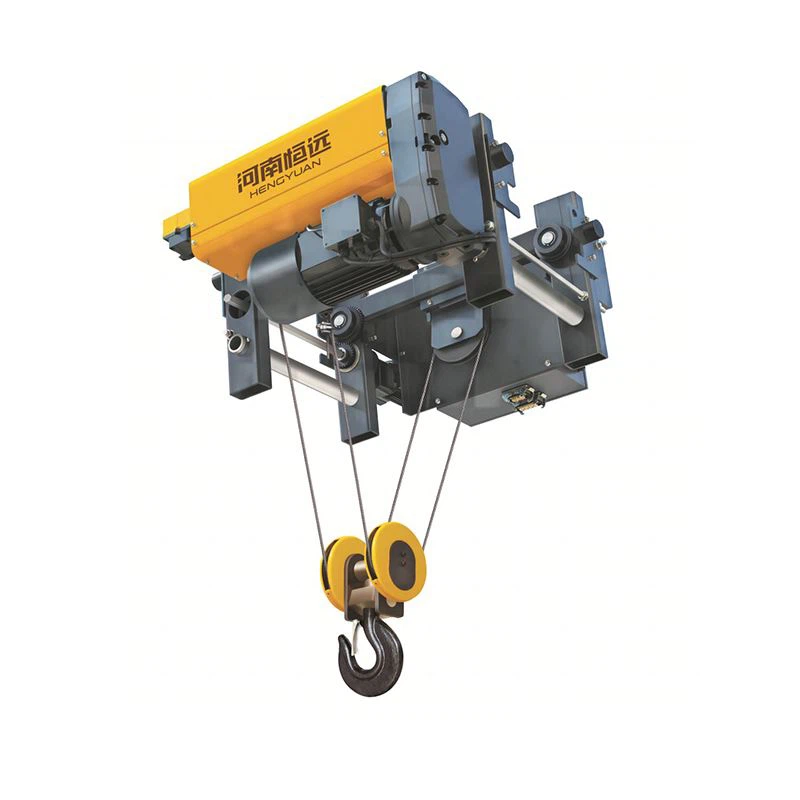
Electric Wire Rope Hoist in Clean Room
It employs motor of hoisting mechanism and reducer imported from Germany. The integrated and compact design of hoisting motor, reducer, reel and limit switch saves space for the user. Modular design increases the reliability of mechanism meanwhile reduces the time and cost for maintaining

European Type Wire Rope Electric Hoist
European electric hoist is a special lifting equipment installed on overhead cranes and gantry cranes. European hoist has the characteristics of small volume, light weight, simple operation, and convenient use, and is used in industrial and mining enterprises, storage terminals, and other places.
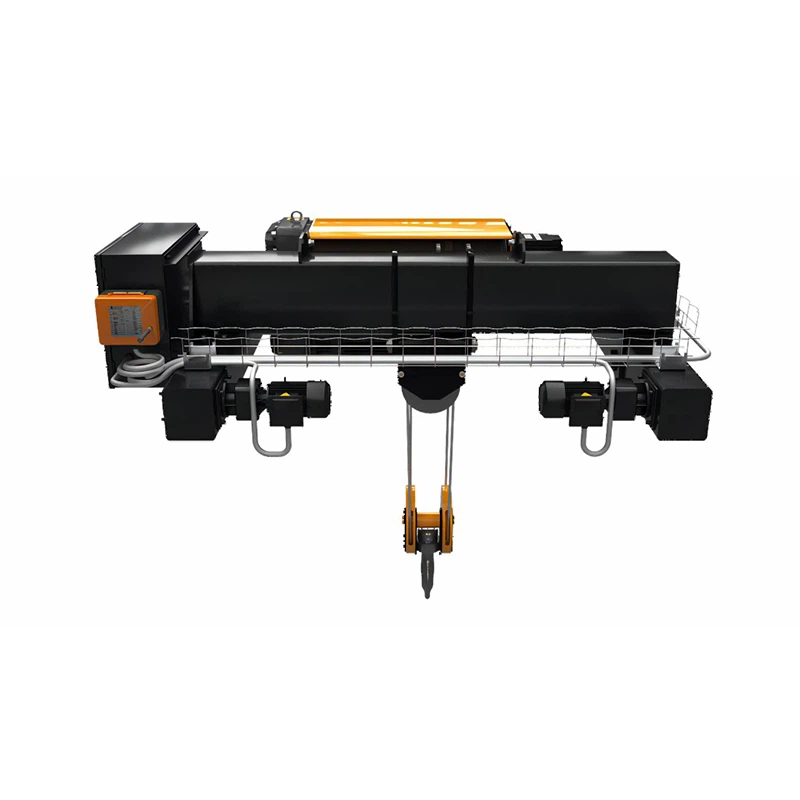
European Type Electric Wire Rope Hoist
Protection grade of electric motor is Grade IP55,and insulation grade is F
Lifting hook group with safety caps
Environment temperature:-20~+40℃

Low Clearance Electric Chain Hoist
Lifting height: as per customer demands
Trolley travel: hook/manual/electric
Ambient temperature: -20℃~45℃
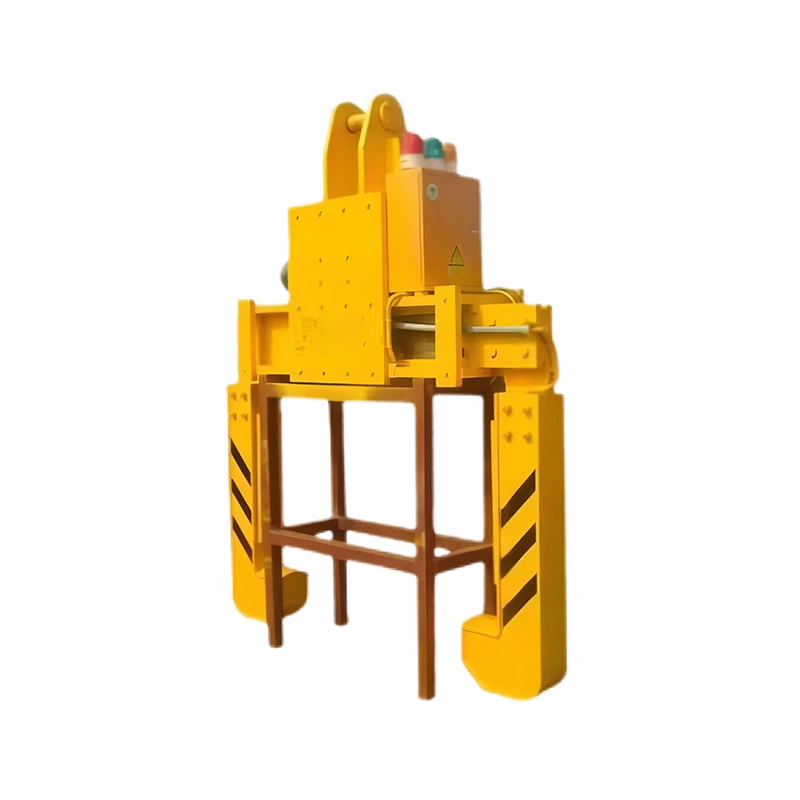
Supporting Tong for constant-sized objects with support clearance underneath, such as boxes. crates. bins and containers. The lifting feet support the load and maintain it on a horizontal lifting plane.
Vertical Lifting Clamp are simple yet powerful tools used to securely grip and lift heavy loads. They come in various types and sizes, each designed for specific lifting tasks. These clamps are commonly used to handle materials like steel plates, concrete blocks, and other heavy objects in industrial environments.The two most common types of plate lifting clamp are:Horizontal plate lifting clamp,Vertical plate lifting clamp.
Benefits of Vertical Lifting Clamp
Enhanced Efficiency
Beam clamps are one type of lifting clamp that is used to lift and move huge objects, which helps expedite the material handling process quickly and safely. They can be attached and detached quickly and easily because to their ergonomic design.
Versatility
Vertical Lifting Clamp are versatile tools that can be used in a wide range of industries and applications. From construction and manufacturing to logistics and shipbuilding, lifting clamps adapt to various load sizes and shapes, making them indispensable in diverse environments.
Improved Safety
In any lifting activity, safety must always come first. By lowering the amount of physical handling and the potential for injuries caused by lifting big items, lifting clamps make workplaces safer. raising clamps ensure the security of the load and the workers handling it by preventing any movement while raising.
Precise Positioning
When installing or assembling something, having exact control over the position of the weight is essential. Lifting clamps provide this control. When working with fragile or sensitive materials, this degree of control is essential.
Application of Vertical Lifting Clamp
Transportation Industry
Lifting clamps are most commonly used in the transportation industry. In this instance, transportation means the movement of heavy structures from one location to another. They're used to move automobiles onto trucks, goods into crates, and heavy goods in manufacturing and construction.
Mining Industry
Heavy loads and terrible conditions are normal in mining operations, that is why it is necessary to conform with all safety requirements. Many extractions and manoeuvring activities rely on lifting clamps with plenty of strength to lift and carry any type of goods or material while staying safe.
Steel Industry
Since this sector is one of the strongest and most vital in modern history from the past two centuries, improved safety features and work conditions are being incorporated. The use of automated lifting clamps allows procedures in special conditions such as manufacturing facilities and metalworking to be carried out remotely.
Construction Industry
Lifting clamps are used to efficiently move heavy manufactured construction materials such as roofing sheets, large windows and doors, and metal pipes. They are also used to handle other materials such as wood used during residential construction, huge furniture, flooring, ceilings, and windows.
Vertical plate lifting clamps
The first type on this list are vertical plate clamps. These devices work to lift and handle plates or sheets of material from a horizontal position to a vertical orientation. Vertical clamps are commonly used in steel fabrication, construction, and manufacturing industries to move and position large steel plates or sheets.Vertical plate clamps attach easily and provide a nice, secure grip on the materials lifted. However, improper usage of these clamps may lead to damage or accidents, as well as leaving marks on the materials' surface.
Horizontal plate lifting clamps
Additionally, horizontal plate lifting clamps work for lifting plates or sheets (both sagging and non-sagging materials). These often use more than one lifting clamp and employ a wider gripping surface for optimal securement. Horizontal clamps are found in metalworking and construction industries where efficient material handling is necessary.If your freight requires horizontal handling to prevent damage, then using horizontal clamps makes for much more efficient work. Similarly, they also cause damage to the surface of your materials when used improperly. Make sure that all lifting clamps used for the horizontal lift fit appropriately to the material at hand.
Beam clamps
Beam clamps work by attaching to structural beams, providing a secure anchor point for lifting or suspending heavy loads from overhead. These devices are typically constructed from sturdy materials to ensure durability and safety during lifting operations, often featuring adjustable mechanisms for easy vertical and lateral positioning.There are various configurations to accommodate different types of beams, load capacities, and attachment methods. These clamps are ideal for hoisting equipment, machinery, and heavy loads in warehouses, construction sites, and other industrial settings.
Drum lifting clamps
Drum lifting clamps work for safe lifting and transportation of cylindrical drums or barrels, often featuring adjustable gripping arms that firmly grip the circumference of the drum for stability during lifts. These are commonly found in warehouses, manufacturing plants, and logistics centers for handling drums containing liquids or other materials. Some of the benefits with drum lifting clamps include controlled lifts of heavy cylindrical objects without damaging the barrels themselves. This also reduces risk of spills or other damage to the material, equipment, or personnel. Of course, these clamps are limited to their use with specific drum shapes, and with untrained operators, the clamp can exert pressure on the drum's surface, which can cause slight deformation or marking if not careful.
Components of Vertical Lifting Clamp
Tongue forceps
The clamp tongue is connected to the lifting ring above, or it is the overall structure. Through the lifting angle and force direction of the lifting chain connected above, the reaction force can be formed on the clamp body part, and the steel plates in between can be firmly fixed. Be immobilized. Most single-plate and double-plate lifting clamps do not have clamp tongues, or they mainly rely on the force of the clamp body, which is different from the structure in the picture.
Forceps body
The clamp body and the clamp tongue are connected through the clamp shaft. Generally, the pull ring and the clamp tongue will form the entire lifting clamp product with the clamp body. The switch of the pull ring part is installed on the clamp body through bolts and nuts.
Jaws
The plier teeth are the key part where the plier tongue needs to engage with the plier body, and it is also where the steel plate is placed. The height here is the opening size of the lifting pliers. Most of the pliers have a tooth-like structure. Either the pliers body matches the steel pressure ball to contact the pliers, or it is tooth-shaped like the pliers, and the concave and convex parts need to be able to close properly.
Hanging ring
The lifting ring and the upper chain are connected through sling tools such as shackles and butterfly buckles, so that the two can be replaced or combined in time. This structure is often used as a lifting point. It must be kept stable during lifting and the internal shackles cannot slide easily.
Clamp shaft
The clamp shaft requires a certain amount of lubrication, so this is the place that needs lubrication during maintenance. The clamp teeth and the clamp body require more friction and should be kept clean without rust or oil.
How to Choose Vertical Lifting Clamp
Choose according to usage
When choosing a vertical lifting clamp, you must first clarify its purpose. If it is only used for lifting single or small pieces, you can choose lifting clamps; if you need to carry heavy objects over long distances, you can choose handling clamps; if you need to fix the position of the object, you can choose positioning clamps.
Consider how it works
Vertical lifting tongs have two operating modes: manual and electric. Manual lifting tongs are suitable for small-scale, intermittent lifting operations, while electric lifting tongs are suitable for large-scale, continuous lifting operations.
Choose durable materials
Vertical lifting clamps need to withstand large loads during use, so they need to be made of high-strength and durable materials. Generally speaking, metal materials are the main choice.
Pay attention to safety performance
Vertical lifting clamps are dangerous during use, so it is necessary to choose products with high safety performance, such as lifting clamps with safety devices.
Selection of the appropriate clamp
Choose a clamp that is suitable for the weight and size of the steel plate you need to lift. Different clamps have different weight capacities, so make sure to use one that can handle the specific load you are working with.
Preparing the steel plate
Ensure that the steel plate is clean and free of any debris or substances that may affect the grip of the clamp. Also, check for any defects or damage that might compromise the integrity of the plate.
Positioning the clamp
Properly position the clamp on the steel plate. The ideal location would be near the center of gravity to ensure a balanced and secure lift. Make sure that the clamp is securely attached to the plate and that it is properly aligned.
Securing the clamp
Before lifting, ensure the clamp is securely fastened and locked in place. Double-check that all the bolts and locking mechanisms are tightened to avoid any accidental release during the lift.
Lifting technique
When lifting the steel plate, use proper lifting equipment such as cranes or forklifts, depending on the weight and size of the load. Follow the instructions provided by the equipment manufacturer for safe and effective lifting.
How to Maintain Vertical Lifting Clamp
Regular inspections
Inspect the clamps regularly for signs of wear, damage, or malfunction. Any defects should be reported and repaired or replaced immediately.
01
Training
Only trained and authorized personnel should operate the clamps. Make sure the operator is familiar with the specific model being used, as different clamps may have different operating instructions.
02
Weight capacity
Never exceed the weight capacity specified by the manufacturer for the particular clamp being used. Overloading the clamp can lead to equipment failure and accidents.
03
Center of gravity
Always ensure that the clamp is attached to the steel plate near its center of gravity. This helps maintain balance and reduces the risk of the plate slipping or falling during the lift.
04
Communication
Maintain clear communication between the operator and any other personnel involved in the lifting operation. Use hand signals or two-way radios to coordinate movements and ensure everyone is aware of their roles and responsibilities.
05
Henan Zhongzao Industry Co., Ltd has a registered capital of 10 million yuan, which is located in Changyuan City, Henan Province, and we are professional manufacturer and seller of crane accessories.Our main products include crane spreader, crane hook sets, pulley sets, rolling pulleys etc.The company covers an area of 9600 square meters and has R & D technical team with rich practical experience and strong development ability.
Factory pictures


Certificate


FAQ
Q: How do you use vertical lifting clamps?
Q: Should a vertical plate clamp not be used to lift loads of less than?
Q: What is the purpose of a vertical plate clamp?
Q: How do lifting clamps work?
Q: What is the difference between vertical and horizontal clamps?
Q: How does a clamp stand work?
Q: What makes a good clamp?
Q: Where should clamps be stored after use?
Q: What is a lifting clamp in construction?
Q: How do you lift heavy plates?
Q: How do lifting clamps work?
Q: What makes a good clamp?
Q: What is a plate lifting clamp used for?
Q: How do you use a vertical lifting clamp?
Q: What is a vertical clamp used for?
Q: Should a vertical plate clamp not be used to lift loads of less than?
Q: What is the difference between vertical and horizontal clamps?
Q: Should a vertical plate clamp not be used to lift loads of less than?
Q: How do you use vertical lifting clamps?
Q: Are lifting clamps designed to carry multiple items at a time?
Hot Tags: vertical lifting clamp, China vertical lifting clamp manufacturers, suppliers, factory, Lifting Wire Rope Snatch Block, Wire Rope Sheave Blocks, Crane Sheaves, Double Wheel Pulley Block, Steel Overhead Crane Wheel, Heavy Duty Deck Hook Block