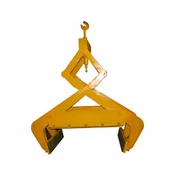
Crane End Beam
End beam track gauge: refers to the distance with tracks on both sides of the end beam, that is, the distance between the centers of the two tracks.

- Product Introduction
Henan Zhongzao Industry Co., Ltd has a registered capital of 10 million yuan, which is located in Changyuan City, Henan Province, and we are professional manufacturer and seller of crane accessories.Our main products include crane spreader, crane hook sets, pulley sets, rolling pulleys etc.The company covers an area of 9600 square meters and has R & D technical team with rich practical experience and strong development ability.
Why Choose Us
Technical team
We have 6 professional engineers and a R&D technical team with rich practical experience and strong development capabilities.
Advanced equipment
The company has a complete manufacturing process and tooling for crane parts and 52 sets of processing equipment. It can produce Φ200mm-Φ2000mm ring forged pulleys, rolled pulleys, forged pulleys and other pulley sets and pulley specifications.
Rich experience
The company was established in 2012 and has more than 10 years of production experience and 5 years of export experience.
Our certificate
ISO9001, ISO4001, ISO45001
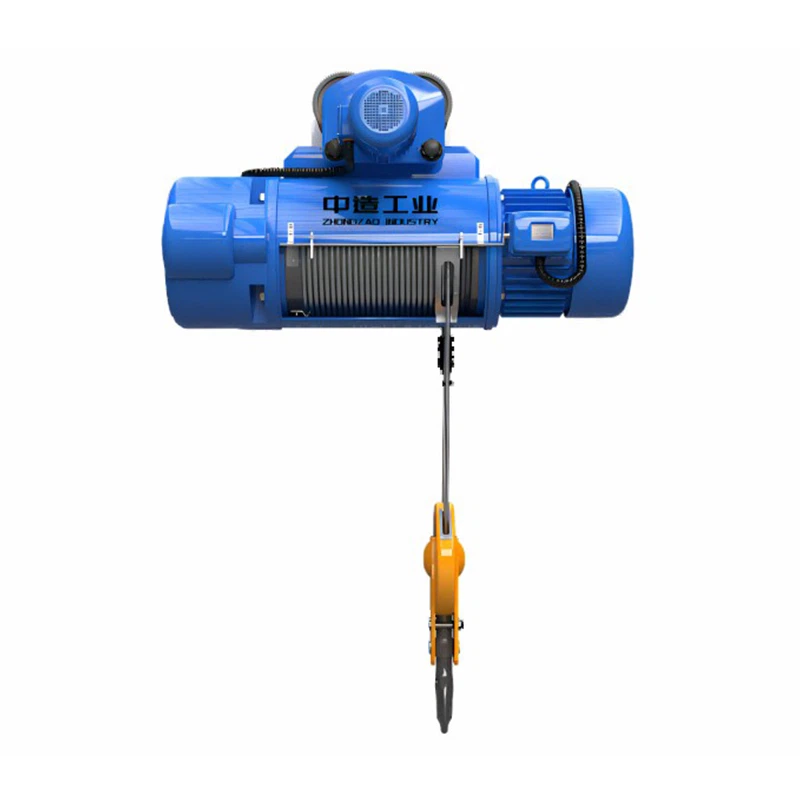
CD and MD Electric Wire Rope Hoist
Model CD1 and MD1 wire rope electric hoist is small-sized lifting equipment, which can be mounted on single beam, bridge, gantry and arm cranes. With slight modification, it can also used as a winch. It is widely used in factories, mines, harbors, warehouse and shops, essential in raising working efficiency and improving working conditions.
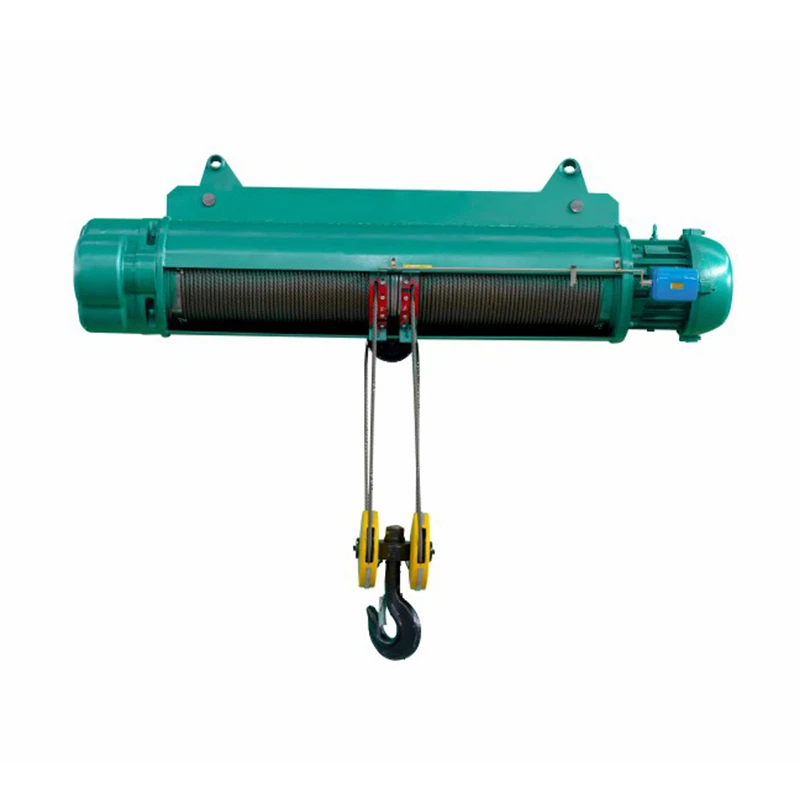
Fixed Electric Wire Rope Hoist
The crane has carried out a number of technical innovation and optimization design on the original basis to improve the performance, safety and reliability of the crane. Through the detailed analysis of the main components of the crane, the working principle and advantages are expounded, which provides a useful reference for the development and application of similar products.

Explosion Proof Electric Wire Rope Hoist
Explosion-proof electric hoist is the explosion-proof lifting equipment designed and manufactured by the latest explosion-proof standard in China. Its explosion-proof form is "explosion-proof type". The exposed explosion-proof parts of the calabash are made of special spark-free materials, and the explosion-proof performance is safe and reliable.

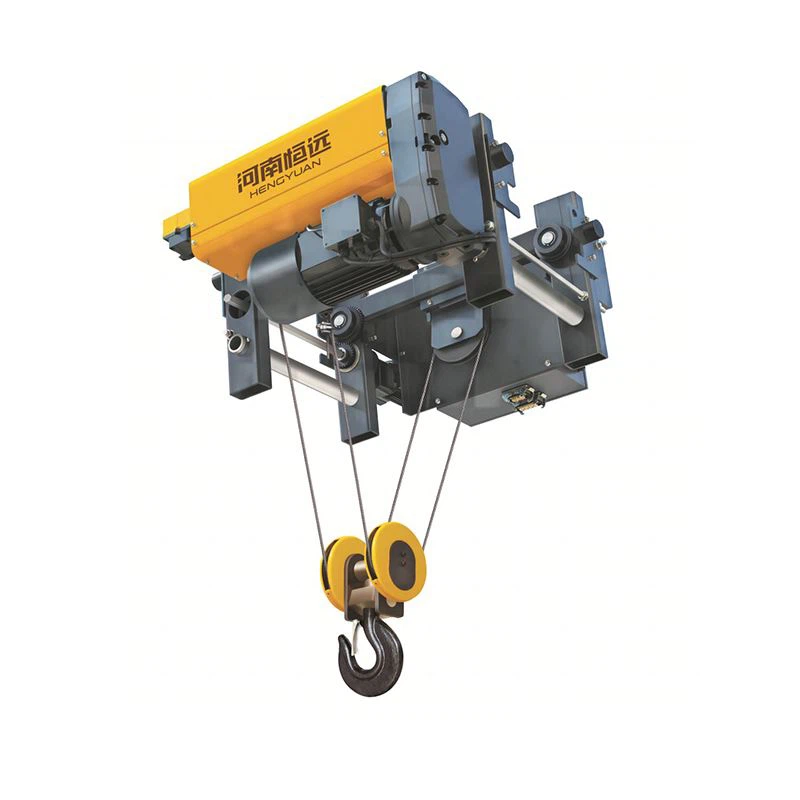
Electric Wire Rope Hoist in Clean Room
It employs motor of hoisting mechanism and reducer imported from Germany. The integrated and compact design of hoisting motor, reducer, reel and limit switch saves space for the user. Modular design increases the reliability of mechanism meanwhile reduces the time and cost for maintaining

European Type Wire Rope Electric Hoist
European electric hoist is a special lifting equipment installed on overhead cranes and gantry cranes. European hoist has the characteristics of small volume, light weight, simple operation, and convenient use, and is used in industrial and mining enterprises, storage terminals, and other places.
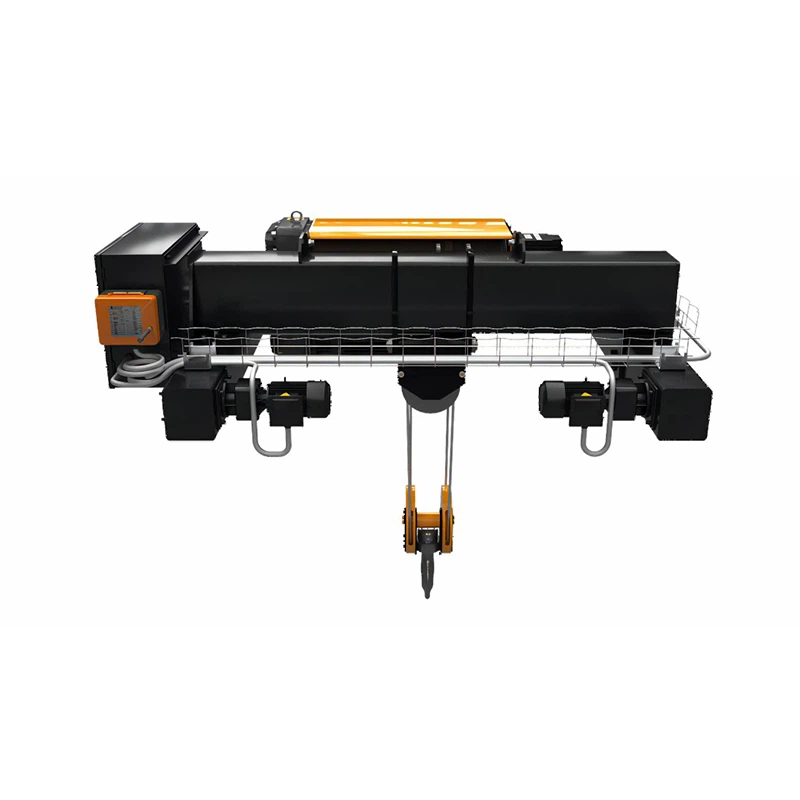
European Type Electric Wire Rope Hoist
Protection grade of electric motor is Grade IP55,and insulation grade is F
Lifting hook group with safety caps
Environment temperature:-20~+40℃

Low Clearance Electric Chain Hoist
Lifting height: as per customer demands
Trolley travel: hook/manual/electric
Ambient temperature: -20℃~45℃

Reducer box+motor +brake three-in-one optimization integration design.The end beam is formed by rectangular steel pipe or welding, which is processed and formed in a single position by CNC machine tool. Steel material Q345B.
The crane end carriage plays an important role in the operation of the bridge crane, which is the key part of the load translation. The end beam consists of two parts: the wheel and the end girder. The end girder is composed of the upper cover plate, the web plate and the lower cover plate, and the connecting plate and angle steel are used for fastening. The internal mounting of the crane end carriage is generally strengthened and the stability of the end girder is improved. During the design of the bridge crane, the size of the end beam should be designed according to the span of the main beam, the wheelbase and the wheelbase of the trolley. When installing a overhead crane, the end beam is usually connected to the main beam, and then the end of the beam at both ends of the connection.
Benefits of Crane End Beam
Strong load-bearing capacity
The end beam structure of the crane is made of steel, which has a solid structure and strong load-bearing capacity.
Good stability
The end beam structure supports the overall weight of the crane. The double beams of the double-beam end beam structure are parallel to each other, making the structure more stable.
Save space
The end beam structure can be designed and installed in various buildings, and double-layer space can be utilized..
High precision
The end beam has good structural stability and high operating precision. It is widely used in logistics, aviation, manufacturing and other fields.
Support main beams and loads
The main function of the end beam is to support the main beam of the crane and the suspended load. They bear all the forces generated by the crane during operation, including the weight of the hoisted object and the dead weight of the main beam.
Connect rails to move
End beams are attached to rails or rails, allowing the crane to move along the rails. This movement is essential for moving heavy objects laterally within the work area.
Install drive mechanism
The end beams are usually equipped with drive equipment, such as electric motors and transmission systems (such as gearboxes), which drive the crane to move along the track.
Ensure structural stability
The design and structure of the end beam ensure the overall stability and balance of the crane. This is essential for safe and efficient lifting and handling of heavy objects.
Reduce structural stress
End beams help spread and balance loads, reducing stress on main beams and other structural components, thereby extending the service life of the crane.
Adapt to different installation needs
End beams can be designed in a variety of forms to suit the needs of different types of cranes and different working environments, such as bridge, gantry or suspension cranes.
Easy maintenance and replacement
In crane designs, end beams are often easily accessible and maintainable, which is important in keeping the equipment in optimal working order.

Fixed end beam
Fixed end beam refers to a structure that is directly fixed on the crane and cannot be adjusted or moved. This type of end beam has high stability and load-bearing capacity, but cannot be flexibly adjusted during use.
Adjustable end beam
Adjustable end beams are support structures that can be adjusted and moved. The crane can be adjusted according to specific conditions to achieve better support and balance. This type of end beam provides greater flexibility, but the load-bearing capacity is reduced.
Telescopic end beam
Telescopic end beams are structures whose length can be adjusted. The length of the end beam can be adjusted according to the specific needs and working conditions of the crane to meet different operating requirements. This type of end beam has a wider range of uses and also requires higher maintenance costs.
Beam body
The main structure of the crane end beam is usually made of steel and has sufficient strength and stiffness to carry the weight.
Round Group
The end beam of the crane is usually equipped with a wheel set, including a driving wheel and a driven wheel. The wheel set allows the end beam to move along the track, thereby driving the horizontal movement of the entire crane.
Drive unit
Motor and transmission system used to drive the movement of the crane's end beam. These units are connected to the drive wheels via gearboxes, providing the necessary power to move the end beams.
Connecting parts
It includes connecting elements such as bolts and welded parts that connect the crane end beam to other parts of the crane (such as the main beam).
Buffer
The buffer devices located at both ends of the crane's end beam are used to reduce the collision impact between the end beam and the track terminal and protect the structure from damage.
Conductive device
Devices that provide power to the crane, such as slide wires, cable drums, etc., ensure that the crane's end beam can receive power stably during movement.
Walking track
Although not part of the crane's end beam, it is critical to its operation. The wheel sets of the end beams move on these rails.
Access platforms and guardrails
There may also be platforms and guardrails on the crane end beams for maintenance personnel to ensure safety.
● Simple structure, High space utilization rate and smooth running, it is a good partner of suspension crane manufacturing.
● Light weight, Fashion appearance, low noise with high efficiency, effectively guaranteed high size accuracy.
● Buffer motor drives and hot-rolled steel channel, with bilateral gear compound idler wheel drive.
● Compact built-in stopper also adaptive to photoelectric, and greatly improved aesthetics.
● Forged wheels, geared motor, head board, buffer and other parts all use high quality materials to ensure safety and durability.
● Whole set end carriage includes wheels, gear motor, connect plat bolts, rubber buffers, etc.
● Can be used for single and double-girder overhead travelling cranes, suspension cranes and travelling structures.
End beam span: Refers to the distance between the two ends of the end beam.
End beam height: Refers to the height of the end beam, generally refers to the distance from the ground to the bottom of the end beam.
End beam length: Refers to the length of the exposed ends of the end beam.
End beam track gauge: Refers to the distance with tracks on both sides of the end beam, that is, the distance between the centers of the two tracks.
End beam gauge width: Refers to the width of the track on both sides of the end beam, which is the actual width of the track.
The height of the hanging point of the end beam: Refers to the height of the hanging point on the end beam used for hoisting goods.

Preventive maintenance
Preventive maintenance is a proactive approach to equipment maintenance that involves performing regular inspections and maintenance tasks to prevent equipment failure and prolong its lifespan. This includes regular cleaning, lubrication, and inspection of equipment components such as gears, bearings, and motors.
Crane end beam servicing
Crane End Beam is a crucial aspect of lifting equipment maintenance. A regular winch service should include an inspection of the winch drum, cable, brake, and control system. It's important to identify and address any issues before they become major problems that could require expensive winch repairs. Additionally, Crane End Beam should include an inspection of the winch's safety systems, such as the load-limiting device and the emergency stop mechanism, to ensure they are functioning properly.
Inspection and testing
Inspection and testing are critical components of Crane End Beam maintenance. Regular inspections help to identify any issues with the equipment and ensure that it continues to meet safety standards. Testing is important to verify that the equipment is functioning properly and that it's capable of safely handling the loads it was designed to carry. It's essential to have qualified personnel perform these inspections and tests, who have the knowledge and expertise to properly assess the equipment's condition.
Equipment storage
Proper storage of your Crane End Beam is also an important aspect of maintenance. When not in use, equipment should be stored in a dry, secure location to protect it from weather damage and theft. It's also important to make sure that the equipment is properly secured to prevent it from shifting or tipping over, which could cause damage.
Henan Zhongzao Industry Co., Ltd has a registered capital of 10 million yuan, which is located in Changyuan City, Henan Province, and we are professional manufacturer and seller of crane accessories.Our main products include crane spreader, crane hook sets, pulley sets, rolling pulleys etc.The company covers an area of 9600 square meters and has R & D technical team with rich practical experience and strong development ability.
Factory pictures


Certificate


FAQ
Q: What is the deflection limit for a crane beam?
Q: What is the horizontal deflection of a crane beam?
Q: What is the maximum deflection in beams should not exceed?
Q: Which type of beams are most often placed using a crane?
The crane girder or girders are connected to the end trucks and they are the structure by which the trolley is supported. Girders are the large horizontal boxes or beams and are considered to be a principal element of the overhead crane system.
Q: What is the maximum permissible horizontal and vertical deflection?
Q: How do you calculate crane boom deflection?
Q: What are the different types of beams used in cranes?
Q: What should you always avoid when working around cranes?
Q: What is a crane beam?
Q: What is the maximum not typically allowed in a beam?
Q: Which of these conditions creates the maximum deflection in a beam?
Q: Where does the maximum or minimum deflection of a beam occur?
Q: How do you determine the maximum deflection of a beam?
Q: What is the allowable deflection for a crane beam?
Q: Which type of beams are most often placed using a crane?
The crane girder or girders are connected to the end trucks and they are the structure by which the trolley is supported. Girders are the large horizontal boxes or beams and are considered to be a principal element of the overhead crane system.
Q: Does a crane have tie beams?
Q: What are the different types of beams used in cranes?
Q: How long can a steel beam be without support?
Q: Why is it important to determine the maximum deflection of a beam?
Q: What are the major factors that affect deflection in beams?
Hot Tags: crane end beam, China crane end beam manufacturers, suppliers, factory, Crane End Beam, HSY Electric Chain Hoist, Double Crane Hook Block with Latch, Wire Rope Sheave Blocks, Engine Forged Crane Wheels, Single Crane Hook