





CD vs MD Wire Rope Hoists: Which One Fits Your Job?
 Jul 27, 2026|
 CD vs MD Wire Rope Hoists: Which One Fits Your Job?
CD and MD electric wire rope hoists look similar and share many structural components, but they are designed for different operating needs. The main difference is lifting speed: a CD hoist normally provides one standard lifting speed, while an MD hoist combines standard lifting speed with a slower speed for more accurate load positioning.
Choosing between them should not be based only on purchase price. Load capacity, lifting height, positioning accuracy, operating frequency, available headroom, power supply and working environment must all be considered. A correctly selected hoist improves handling efficiency and avoids paying for functions the application does not require.
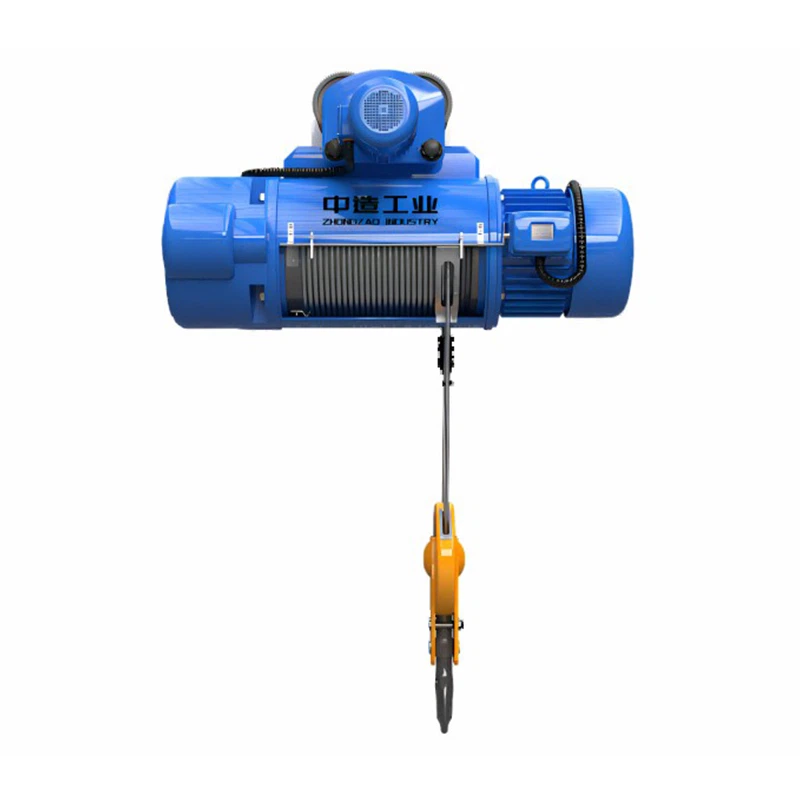
What Is a CD Electric Wire Rope Hoist?
A CD electric wire rope hoist is a single-speed lifting unit intended for straightforward lifting and lowering operations. It is commonly used in warehouses, repair workshops, production facilities and material storage areas where loads do not require extremely precise positioning.
Its relatively simple speed arrangement makes the CD model practical for general-purpose lifting. When the operator mainly needs to move loads between clearly separated upper and lower positions, a single lifting speed can provide an economical and efficient solution.
What Is an MD Electric Wire Rope Hoist?
An MD electric wire rope hoist provides two lifting speeds. The standard speed handles normal lifting, while the slower speed allows the operator to approach the final position more carefully. In common CD/MD configurations, the two speeds may be approximately 8 m/min and 0.8 m/min, although the final specification must be confirmed for each model.
The slower speed is valuable when installing machinery, positioning molds, assembling components or aligning a load with a fixture. It reduces the need for repeated starting and stopping and helps limit sudden movement near the final lifting position.
Quick Comparison
| Selection Point | CD Hoist | MD Hoist |
|---|---|---|
| Lifting speed | Single speed | Standard and slow speeds |
| Positioning accuracy | Suitable for general handling | Better for careful positioning |
| Typical application | Warehousing and routine lifting | Assembly, installation and mold handling |
| Control complexity | Simpler | Additional slow-speed control |
| Initial cost | Usually lower | Usually higher |
Choose a CD Hoist When
A CD hoist is usually suitable when lifting tasks are repetitive but do not demand fine positioning. Examples include transferring packaged materials, lifting maintenance tools, moving components between floors and loading general workshop equipment.
It is also a sensible choice when the budget is limited and the application does not benefit from an additional slow speed. However, the required capacity and duty level must still be calculated according to the actual load and operating frequency.
Choose an MD Hoist When
An MD hoist is a better option when the operator must position a suspended load accurately. The slow speed can assist during equipment installation, mold replacement, machine maintenance and assembly work where the load must be aligned with bolts, fixtures or mounting points.
Two-speed control can also reduce load movement near the destination. It does not replace correct operating procedures, but it gives the operator more control than repeatedly jogging a single-speed hoist.
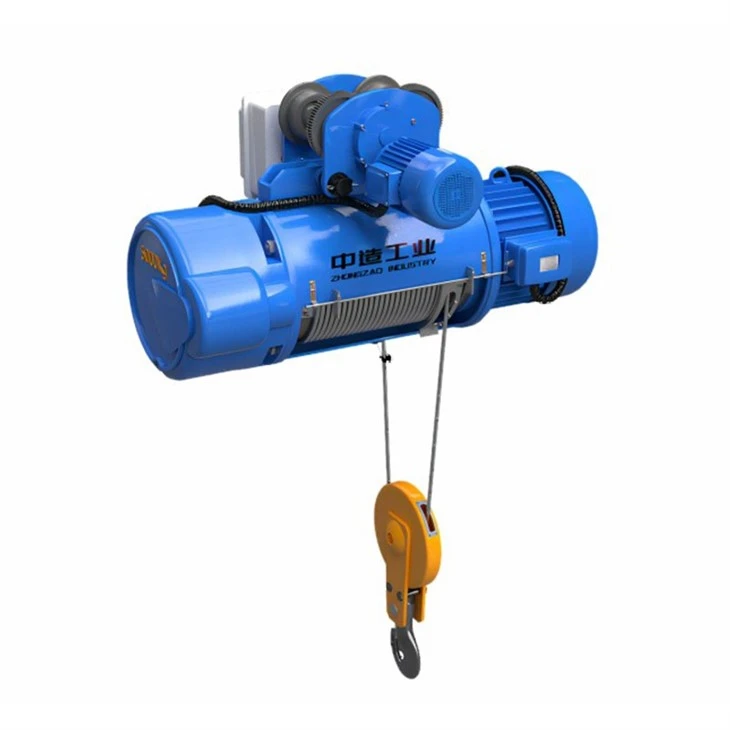
Seven Details to Confirm Before Ordering
1. Rated Lifting Capacity
Determine the maximum actual load, including lifting attachments. Do not select a hoist whose rated capacity is lower than the total suspended load, and do not use additional capacity as a substitute for proper application analysis.
2. Required Lifting Height
Measure the vertical distance from the lowest hook position to the highest required hook position. Additional rope length and drum capacity may be needed for tall buildings, pits or multi-level work areas.
3. Available Headroom
Headroom is the vertical distance consumed by the hoist installation. In buildings with a low roof or limited beam clearance, a low-headroom arrangement may provide more useful hook travel than a conventional configuration.
4. Operating Frequency
Record how many starts, lifts and operating hours are expected during a normal shift. A hoist used occasionally in a repair shop has different motor, brake and gearbox requirements from one serving a continuous production line.
5. Beam and Trolley Information
Provide the beam type, flange width, flange thickness and minimum curve radius when the hoist travels on a monorail. The trolley wheel spacing and adjustment range must suit the supporting beam.
6. Power Supply and Control
Confirm the local voltage, frequency and phase before manufacturing. Pendant control, wireless remote control and crane control-panel integration should also be discussed during technical selection.
7. Working Environment
Indoor dust, outdoor rain, high humidity, corrosive substances, low temperature and hazardous atmospheres require different protection measures. Explosion-proof equipment must be selected according to the site's hazardous-area classification rather than by product appearance alone.
Safety Features to Discuss with the Supplier
Depending on the application, useful safety and control options may include upper and lower limit switches, overload protection, motor over-temperature protection, emergency stopping, phase-loss protection and travel limit devices. The final arrangement should comply with the applicable regulations, crane design and site procedures.
Before each shift, operators should observe the wire rope, hook, brake response, control buttons and unusual sounds. Limit switches are protective devices and should never be used as the normal method for stopping every lifting cycle.
Related Hoist Options
View suitable lifting equipment:
CD and MD Electric Wire Rope Hoist for general lifting and two-speed precision positioning.
Wire Rope Electric Hoist Series for low-headroom, fixed, explosion-proof and customized applications.
Electric Wire Rope Hoist with Manual Trolley for occasional horizontal load positioning.
Low Headroom Electric Chain Hoist as an alternative for compact work areas and suitable lifting duties.
Information to Include in Your Inquiry
For a faster technical recommendation, provide the rated load, lifting height, required lifting speed, duty frequency, beam dimensions, travel distance, voltage, control method and installation environment. Photographs or drawings of the working area are helpful when headroom or beam compatibility is uncertain.
Conclusion
Choose a CD hoist when the task involves straightforward lifting at one normal speed. Choose an MD hoist when accurate final positioning is important and a slower lifting speed can improve control.
Speed is only one part of hoist selection. Capacity, lifting height, headroom, duty level, beam dimensions, electrical supply and environmental conditions must be reviewed together before the final model is confirmed.