





Common Crane Safety Checks Before Daily Operation
 Jul 14, 2026|
 Daily crane safety checks are essential for safe and stable lifting operations. Whether the crane is used in a workshop, steel plant, warehouse, port, construction site or maintenance area, operators should complete a basic inspection before each shift. A few minutes of checking can help identify visible damage, reduce downtime and prevent unsafe lifting conditions.
This article introduces common crane safety checks before daily operation, including the crane hook, hook block, wire rope, sheaves, hoist, brake system, controls and working area. It is also useful for buyers and maintenance teams when selecting suitable crane hooks, hook blocks and lifting accessories.

1. Inspect the Crane Hook Before Lifting
The crane hook is the direct connection between the lifting equipment and the load. Before operation, the operator should check whether the hook has cracks, deformation, twisting, corrosion, abnormal opening or excessive wear. If the hook throat opening becomes larger than the allowed range, or if the hook body shows visible damage, the crane should not be used until the hook is inspected by qualified personnel.
The safety latch should also be checked carefully. It should close smoothly and hold the sling or lifting accessory in position. A missing, bent or loose latch may allow the sling to slip out during lifting. For heavy-duty lifting, a strong and reliable hook design is very important.
For applications requiring higher load stability, products such as 220 Ton Crane Hook Block With Double Hook For Heavy Lifting can be considered for demanding lifting conditions.
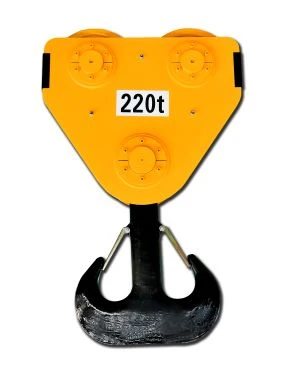
2. Check the Crane Hook Block
The crane hook block carries the hook, sheaves, bearings and connection parts. It plays an important role in load distribution and lifting stability. During the daily inspection, operators should check whether the hook block rotates normally, whether the side plates are damaged, whether bolts are loose, and whether there is abnormal noise during movement.
If the hook block cannot rotate smoothly, the wire rope may not align correctly during lifting. This can increase wear on the rope and sheaves. A damaged hook block should be repaired or replaced before the crane is put into operation.
Heavy-Duty Crane Bottom Blocks are suitable for applications where stable lifting, strong structure and easy inspection are required. For wire rope lifting systems, Heavy Duty Crane Hook Pulley Assembly For Wire Rope Lifting is also a useful product reference.

3. Examine Wire Rope Condition
Wire rope condition directly affects lifting safety. Before daily operation, check whether the wire rope has broken wires, flattening, kinks, corrosion, birdcaging or uneven winding. Pay special attention to sections near the hook block, drum and sheaves, because these areas often experience repeated bending and friction.
If the wire rope is not winding neatly on the drum, stop the equipment and correct the problem before lifting a load. Uneven winding can damage the rope and reduce service life. Operators should also confirm that the rope diameter matches the sheave groove and drum design.
4. Inspect Crane Sheaves and Pulley Wheels
Crane sheaves guide the wire rope and help distribute the lifting load. During inspection, check whether the sheave rotates smoothly and whether the groove surface is worn, cracked or damaged. A worn groove can pinch the wire rope or cause rope misalignment. Dirt, metal chips or foreign objects should be removed from the sheave area.
For wire rope hoist systems, properly matched pulley wheels help improve rope life and lifting stability. Products such as Grooved Hoist Pulley Wheel For Wire Rope Systems and Heavy Duty Crane Pulley Wheel For Wire Rope Hoists can be linked in this section to guide visitors to relevant products.

5. Test the Hoist and Brake System
Before lifting a load, test the hoist without load. Move the hook up and down slowly and listen for abnormal noise. The lifting and lowering movement should be smooth. The brake should respond quickly and hold the hook firmly without slipping.
If the hoist shows delayed response, shaking, unusual vibration or brake slip, operation should be stopped immediately. Brake problems can create serious safety risks, especially when handling heavy loads or operating in high-frequency working conditions.
For overhead crane applications, European Electric Wire Rope Hoist For Overhead Cranes is a relevant product link for readers who are comparing lifting equipment and hoist solutions.

6. Check Limit Switches and Control Devices
Limit switches are designed to prevent over-travel of the hook, trolley or bridge. Before daily operation, operators should confirm that the upper limit switch, lower limit switch and travel limit devices are functioning correctly. These devices should not be used as normal stopping methods, but they are important safety protections.
Control buttons, pendant controls and remote controls should also be checked. The emergency stop button should be easy to reach and responsive. Damaged cables, loose buttons or unclear labels should be repaired before use.
7. Confirm Load Weight and Rigging Method
Before lifting, confirm the weight of the load and make sure it is within the rated capacity of the crane, hoist, hook and lifting accessories. Overloading is one of the most dangerous causes of crane accidents. Operators should also check the lifting point, sling angle and load balance.
The hook should be positioned above the load center of gravity before lifting. Side pulling should be avoided because it can damage the hook block, sheaves, wire rope and crane structure. If the load shape is irregular, a proper lifting plan should be prepared before operation.
8. Inspect the Working Area
The working area must be clear before lifting begins. Remove obstacles from the travel path and keep workers away from suspended loads. Operators should never lift loads over people. If the crane works in a busy production area, clear communication between the operator, rigger and signal person is necessary.
Lighting, floor condition and surrounding equipment should also be checked. Poor visibility or blocked travel routes can increase the risk of collision, load swing or unsafe operation.
9. Keep a Daily Crane Inspection Record
A daily inspection record helps maintenance teams track equipment condition over time. The record may include hook condition, wire rope condition, sheave condition, brake response, control function, abnormal noise and maintenance notes. If the same problem appears repeatedly, it may indicate that a part needs repair, replacement or design improvement.
For companies using cranes frequently, regular inspection records also support preventive maintenance and reduce unexpected downtime.
Conclusion
Daily crane safety checks help operators find visible problems before lifting work begins. The most important inspection points include the crane hook, hook block, wire rope, sheaves, hoist, brake system, limit switches, controls, rigging method and working area. A consistent inspection routine can improve safety, extend equipment service life and make lifting operations more reliable.
ZHONGZAO supplies crane hooks, crane sheaves, crane hook blocks and lifting equipment for industrial lifting applications. If you need suitable lifting accessories for overhead cranes, gantry cranes, port cranes or workshop hoists, please contact us for product selection support.
```