





How to Select Horizontal Coil Grabs
 Aug 12, 2026|
 How to Select Horizontal Coil Grabs
Horizontal coil grabs are below-the-hook lifting devices designed to handle steel, aluminum and other rolled materials stored with the coil eye in a horizontal position. They are widely used in rolling mills, steel service centers, warehouses, ports and metal-processing plants.
Unlike a general-purpose sling, a properly designed coil grab provides controlled contact with the coil and can reduce manual rigging near the suspended load. However, the grab must be matched to the coil dimensions, weight, surface condition, crane configuration and operating environment.
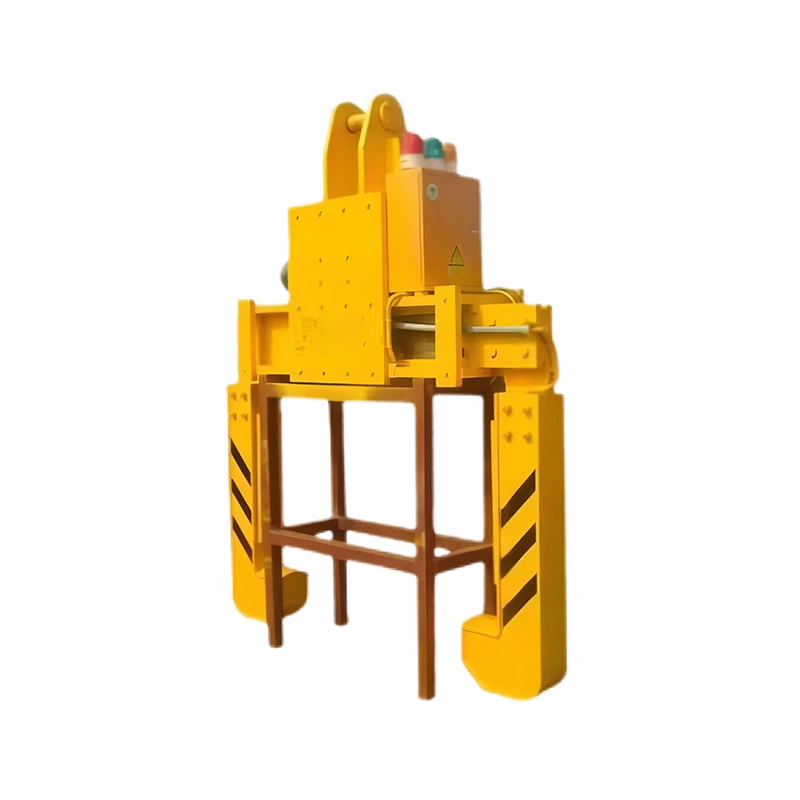
Horizontal coil grab for controlled lifting and transferring of rolled material
1. Confirm the Coil Orientation
The first selection question is how the coil is stored. "Eye horizontal" usually means that the coil bore is parallel to the floor. "Eye vertical" means that the bore faces upward. A lifting device designed for one orientation should not be assumed suitable for the other.
Buyers should also explain whether the coil remains horizontal throughout the movement or must be rotated or turned over. A standard horizontal grab is intended for lifting and transporting rather than changing coil orientation unless a dedicated turning mechanism is included in the design.
2. Define Capacity and Coil Range
Provide the maximum coil weight rather than only the average production weight. The rated capacity of the lifting device must cover the heaviest planned load without depending on an overload device or an assumed safety margin.
Minimum and maximum coil width, outside diameter and inside diameter should be listed separately. These dimensions determine the required opening range, arm length, lifting-shoe geometry and overall size of the grab.
| Required Data | Design Influence |
|---|---|
| Maximum coil weight | Rated capacity and structural strength |
| Coil width range | Opening stroke and arm position |
| Inside diameter | Lifting-shoe size and clearance |
| Outside diameter | Arm length and body clearance |
| Material temperature | Pad, coating and component selection |
3. Select the Gripping Method
Horizontal coil grabs may support the coil through its bore, engage the coil edges or use another application-specific gripping arrangement. The correct method depends on coil orientation, packaging, surface requirements and the available clearance between adjacent coils.
For finished cold-rolled steel or aluminum coils, contact damage can be expensive. Replaceable polyurethane, rubber, brass or other protective contact surfaces may be considered where permitted by the load temperature and engineering design.
Protective pads do not eliminate the need for correct alignment. If a grab is applied at an angle or only one lifting shoe is fully engaged, the coil can become unstable even when its weight remains below the rated capacity.
4. Check Aisle and Stacking Clearance
Measure the smallest gap between neighboring coils, storage saddles, racks and fixed plant structures. The grab legs must enter and retract without striking adjacent material. Narrow storage aisles may require folding claws, telescoping arms or a compact body design.
Available headroom must also be checked. The combined height of the crane hook, suspension assembly, grab body and coil affects the highest and lowest positions that can be reached. This is particularly important in low buildings or when coils are stacked on raised racks.
5. Choose Manual or Motorized Operation
A mechanical grab may suit occasional handling where floor access is controlled and the operating cycle is relatively simple. Motorized opening and closing is often preferred for frequent coil movement because the crane operator can control the grab remotely from a cabin or pendant station.
A motorized design may use a geared motor with a rack-and-pinion or another synchronized transmission system. Buyers should specify the available voltage, phase, frequency, control voltage and electrical connection to the crane.
Optional rotation can improve coil positioning, but it adds weight, headroom requirements and electrical complexity. The required rotation angle, speed and stopping accuracy should therefore be defined before quotation.
6. Specify Safety and Feedback Functions
Motorized coil grabs can be equipped with opening and closing limit switches, arm-position feedback, load-presence detection, warning lights and electrical interlocks. These functions help the operator confirm that the grab is correctly positioned before lifting.
The control logic should prevent unintended opening while the coil is suspended. Where automatic operation is required, the sequence for approaching, closing, confirming engagement, lifting, lowering and releasing should be agreed with the crane and control-system supplier.
Sensors and interlocks are additional protective measures. They do not replace correct positioning, trained operators, an exclusion zone or the inspections specified by the manufacturer.
7. Verify Crane Compatibility
The crane must be rated for the combined weight of the coil and the lifting device. Large motorized grabs can have substantial self-weight, which reduces the remaining payload available from the crane.
Provide the crane hook dimensions, hook-block arrangement, available headroom and suspension preference. A fixed suspension, crosshead, link or custom connection may be required to keep the grab level and correctly oriented.
The crane's electrical system should also be reviewed when a powered grab is selected. Festoon cables, cable reels, auxiliary circuits, radio controls and communication with a PLC may be required.
8. Consider Duty and Environment
A grab used continuously in a steel mill requires a different duty assessment from one used for occasional warehouse loading. State the expected lifts per hour, operating hours per day and annual production schedule.
Temperature, dust, humidity, outdoor exposure and corrosive substances influence the motor enclosure, bearings, lubrication, electrical protection and coating system. High-temperature coils require special engineering and must not be handled with standard protective pads unless those pads are rated for the temperature.
9. Request Testing and Documentation
Before manufacturing, agree on the required design standard, rated load, design category, service class and acceptance criteria. The applicable requirements depend on the country, industry and contractual specification.
The current ASME B30.20 standard addresses marking, construction, inspection, testing, maintenance and operation of below-the-hook lifting devices. ASME BTH-1 provides associated structural, mechanical and electrical design criteria.
Depending on the project, the documentation package may include material certificates, welding records, nondestructive examination reports, dimensional inspections, electrical diagrams, load-test records, operating instructions and spare-parts lists.
Pre-Use Inspection Points
Before each operating period, inspect the grab according to the manufacturer's instructions. Typical points include:
- Rated-load marking and identification plate
- Suspension, pins and retaining devices
- Grab arms, lifting shoes and protective pads
- Welds, structural members and visible deformation
- Limit switches, indicators and control buttons
- Power cables and electrical enclosures
- Bearings, gears and lubrication points
- Synchronized opening and closing movement
Information to Send with Your Inquiry
- Maximum coil weight
- Minimum and maximum coil width
- Inside and outside diameter ranges
- Coil material, surface condition and temperature
- Storage orientation and available aisle clearance
- Crane capacity, hook dimensions and headroom
- Manual, motorized or automatic operation
- Power supply and control requirements
- Required standards, tests and certificates
Conclusion
Selecting a horizontal coil grab requires more than matching its rated capacity to the coil weight. Coil orientation, dimensional range, contact method, storage clearance, crane compatibility, duty cycle and safety controls must be evaluated together.
Supplying complete operating data allows the manufacturer to develop a lifting device that fits the coil, crane and production process while reducing unnecessary manual handling around heavy loads.
ZZIC supplies customized coil-handling devices for steel mills, warehouses, ports and metal-processing facilities.
View our horizontal coil grabs or explore more custom crane accessories and lifting devices.